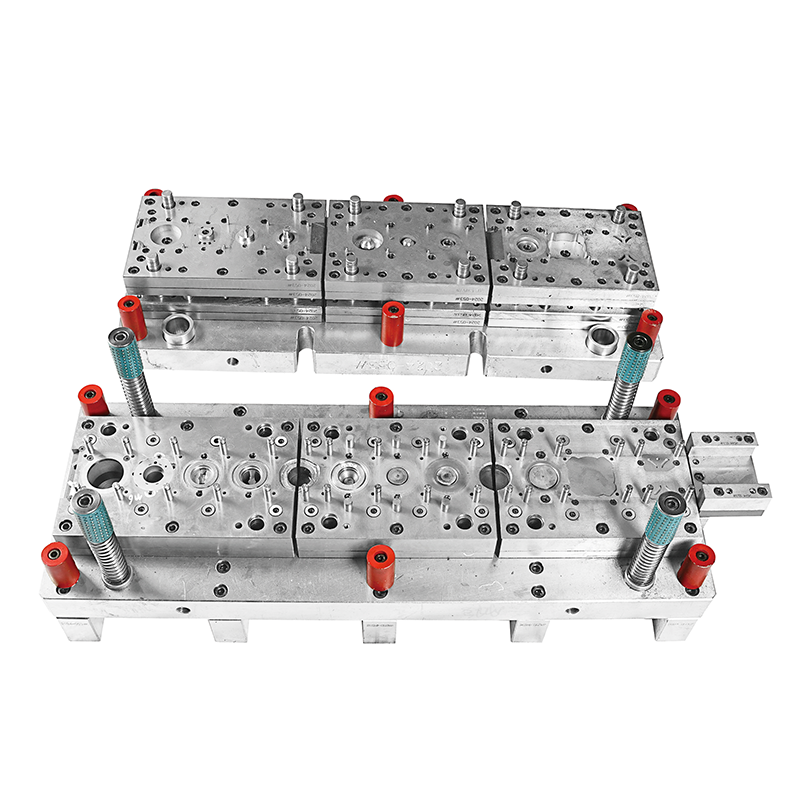
continuous stamping precision mold

All Categories
continuous stamping precision mold

continuous stamping precision mold

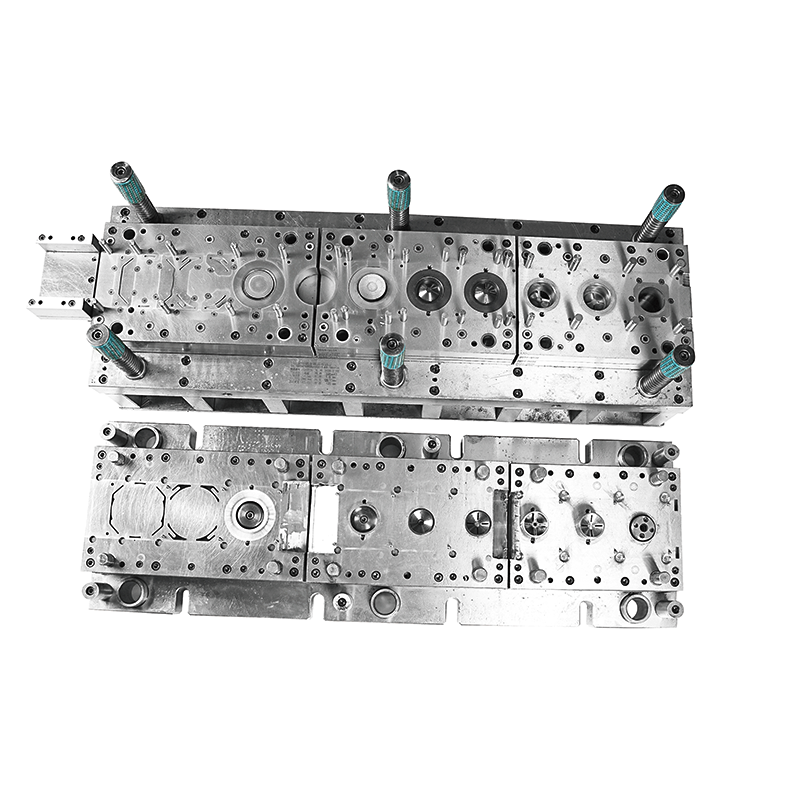
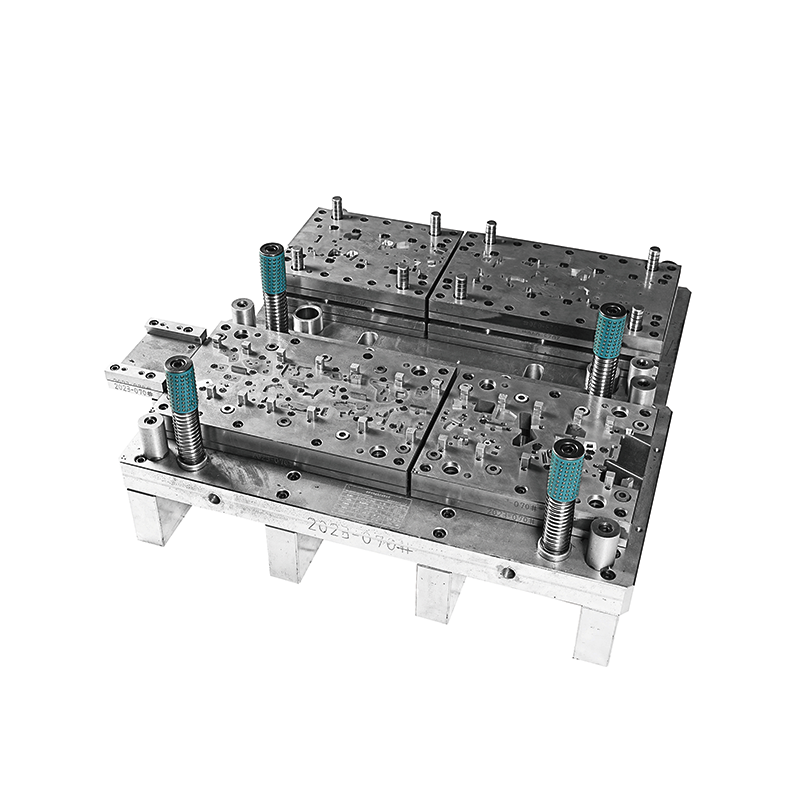
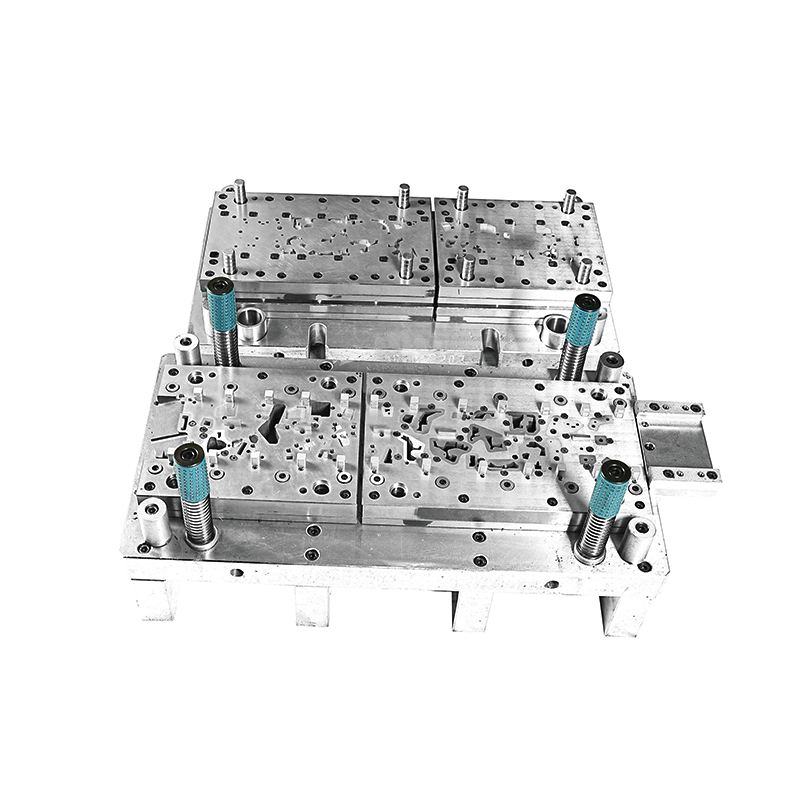
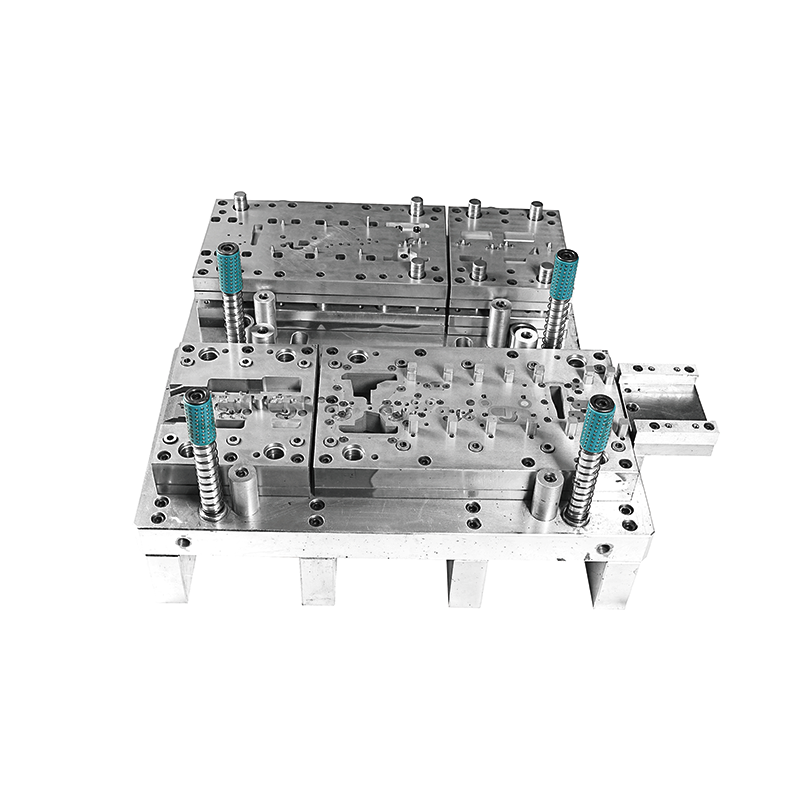
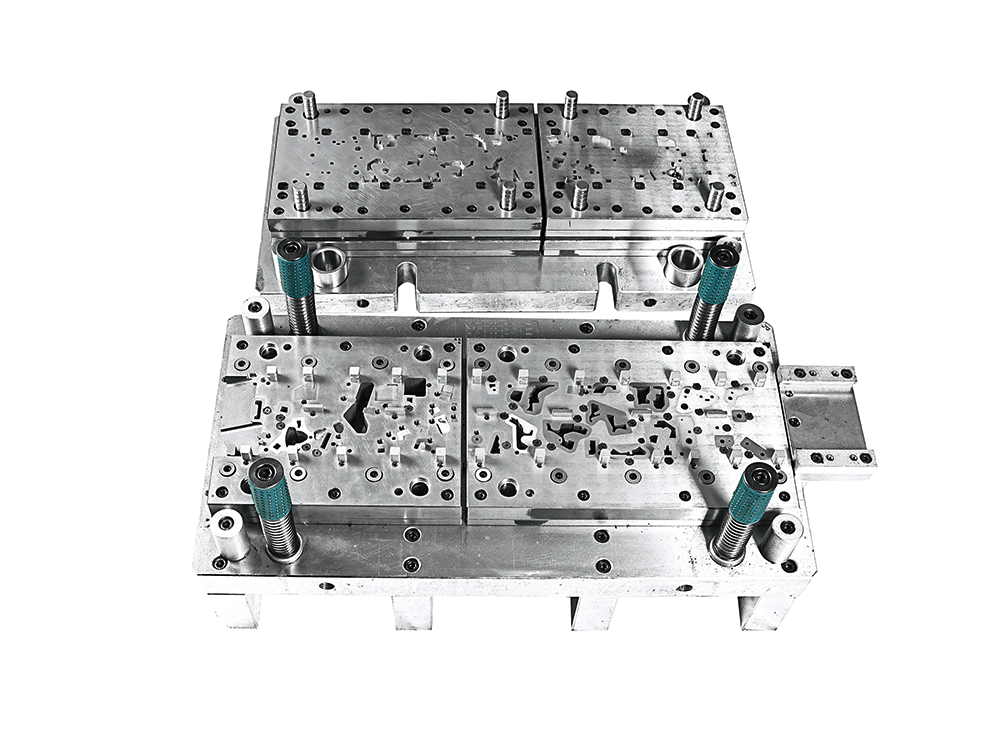
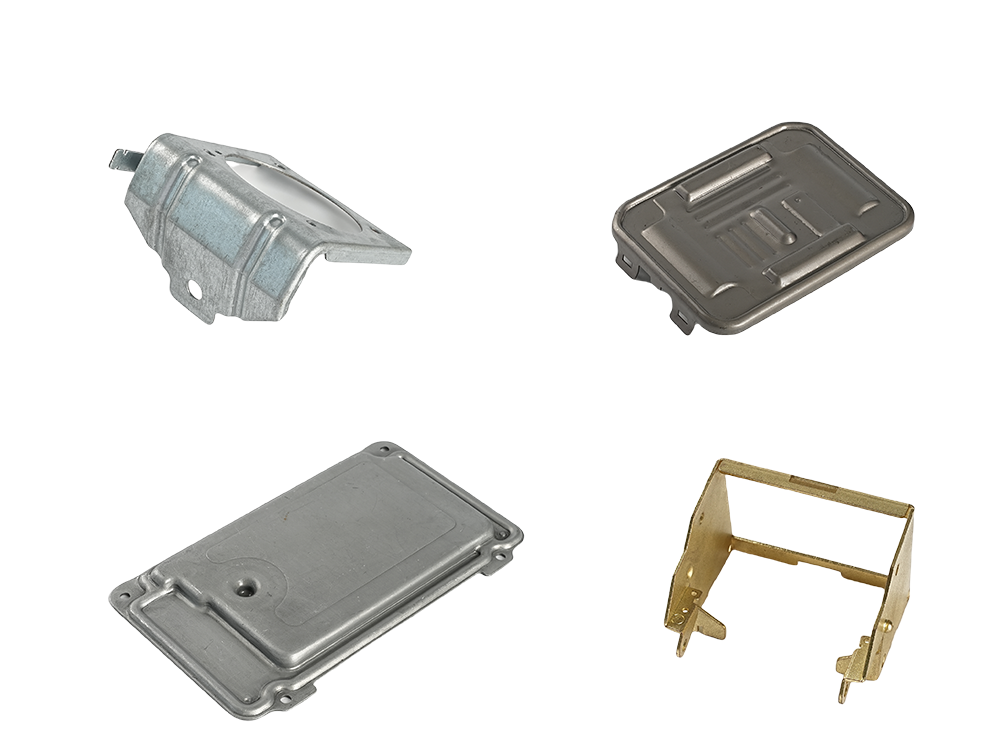
Our designed continuous stamping precision mold is purposefully created to function at high speed levels for electronic component production such as connectors, terminals, and shielding parts. It is intended to execute continuous processes such as blanking, bending, and forming that not only save on the time but also ensure that every produced part is uniform and dimensionally accurate. Made of high-quality steel for the die (SKH-9, ASP23), it went through careful heat treatment and skilled polishing to keep its form as well as service the tooling for a longer time. All cavities and punch parts are manufactured via CNC machining and wire EDM, where each individual cavity and punch can reach an outstanding level of form and micro-feature accuracy. The die mold is also a friend of multi-stage progressive that is a process to manufacture thin metal works such as copper, brass, and stainless steel.
Get A Quote

Product introduction

This continuous stamping precision mold was purposefully designed to make sure that the metal fasteners such as clips, washers, and brackets have high consistency together with speed. The die, which operates on the basis of the technology of the progressive die, can do punching, bending, and trimming in sequence and without interruption. The positive thing about these types of mold is that they can even be in a state wherein they are consumed in the middle of the process while the product sorting continues… The mold is made of materials such as Cr12MoV and SKH51 which are hard, resistant to wear, and resistant to any fashion of damage from any inevitable impact. It has been created through 3D model software and verified by FEA simulations to ensure continuous reliability in the area of constant operation more than acetone acrylic looks good.

Product Advantage

This continuous stamping precision mold is created for the production of high-strength stainless steel parts that need high formability force and top surface texture. Through the use of vacuum-hardened SKH-9 and tungsten alloy inserts, the dies are made with excellent wear and thermal characteristics. These type of dies have a very strong structure and are resistant to deformation in case of long production. The die process includes progressive operations like blanking, embossing, coining, and forming. Due to 3D CAD/CAM optimized tools the material flow in each operation is made smooth and there is almost no distortion. These molds can be used in kitchenware, appliance brackets, and electrical housing sectors and are suitable for any molding of AISI 316, and 304 steels. By application of customized stripper plates and ejector systems, the item is ensured not to get any scratches or have its shape distorted.

High Efficiency and Consistency

The continuous stamping precision mold is the most efficient production tool existing for manufacturing metal parts in high volumes. It has a progressive design that unifies several operations such as cutting, bending, forming into one cycle leading to shorter handling time and reduced labor costs. The press performs a full part with every stroke, which achieves high-speed processes without sacrificing precision. The die is equipped with precision-ground guide pins, and CNC-machined inserts the stamping mold is designed to last for several hundreds of thousand cycles without any noticeable wear, and hence it maintains its tight tolerances and excellent repeatability. Thus, the production of consistent parts of the desired quality has been achieved, in spite of the rigorous conditions in the automotive and electronics industries. This mold by optimizing the production steps is found to be raising the output by 50% compared to the traditional stamping.

Customizable for Diverse Applications

The continuous stamping precision mold is very versatile through total customization to cope with a greatly broad spectrum of production needs. Namely in the case of production of the automotive elements, electronic terminals, hardware brackets, or even appliance housings, this mold can be explicitly tailored to your specific requirement. Clients are given the option to submit 2D drawings, 3D models, or practical samples. Our engineering team will take the design to pieces, choose suitable material options, and carry on the progressive stamping process in silico to have the highest possible material flow rate and part accuracy. Each mold configuration is meticulously prepared using CAD/CAM and stress analysis tools to ensure the absence of any defects such as cracking, warping, or the creation of an uneven form. The unitized construction facilitates the fast change of parts, thus allowing the elimination of the necessity to make new molds from the beginning.

Reduced Production Costs and Scrap Waste

The continuous stamping precision mold can save a good amount of money since it reduces not only the waste of material, but also the use of labor and time. The progressive stamping structure is the one that carries out many duties at once such as the cutting, the forming, and the bending of the materials mostly on-line, so we can say that the need for additional processing and manual work is cut down. Scenario: Quick Tools Gi receives a list of materials from a customer. With precise material feed control and optimized die layouts, material usage is maximized. In this way, material waste is reduced to a minimum by also ensuring that the mold can handle any kind of strip widths and thicknesses efficiently. Also, it makes possible for the automation-friendly design to ensure quicker cycle times, stable product quality, and no or few errors during production.

Superior Durability and Tool Life

Our Continuous Stamping Die Mold is specially created with the highest quality to guarantee satisfactory performance in high-speed, high-pressure operations for a long time. We use top-notch tool steels like SKD11, DC53, or ASP23, and then perform vacuum heat treatment as well as cryogenic tempering. Because of these processes, the mold opt for the best properties like hardness, wear resistance, and impact strength. To increase the longevity of the tool, we also use surface coatings including TiN, TiCN, or CrN to minimize friction and prevent adhesion while the metal stamping process is underway. With such a feature, the mold can be thermally stable in an environment highly susceptible to wear by scratching and corrosion due to chemicals even when working with tough materials of steel, copper, or aluminum alloy.

Q1: What is your minimal order quantity (MOQ)?


A:

We generally set our minimum order quantity for mass production at 1,000 items, notably for existing pieces, either those already in stock or with tooling available. This is a good approach to production cost efficiency, material application, and cargo shipping.


When the customer's idea of a product is such that it will require new mold or specific stamping, in that case, the MOQ can greatly differ due to the design complexity, tooling cost, and especially the size of the die. However, we are very understanding if customers need some units in smaller quantities for the purpose of trying out the product, its validation, or the R&D process; hence we always give our best to be flexible.


If buyers want to test the market and also make sure that the product is excellent, we are ready to make low-volume orders at the start. Through a combination of our sales and engineering teams, you will be advised on the appropriate MOQ for your project.
Regardless of the size of the order, we are prepared and willing to meet the needs of both industrial and small business customers via our scalable and semi-automatic equipment. Please, however, inform us if you have some special requirements—we would only be too glad to help you.


Q2: When would be the delivery time?


A:

The delivery time is related to the type and size of your request; in other words, it depends on your order. If the standard metal-stamping items are in stock, we will deliver to you the goods in 3-10 days after payment is confirmed. However, in the case of special customer products, the customer's request can take from 20 to 50 days for tooling lead time depending on its complexity.


Usually, after the agreement of the mold and confirmation of the sample, the process of mass production will need in the range of 7-15 days. In case of an emergency situation, we can help to speed up the order and to arrange the lead time in priority if it is necessary and following your schedule.


Real-time access throughout the production cycle is provided with updates, including photos showing the progress, mold testing results, and quality control reports. Our logistics team can also use any of the following delivery solutions according to your preference: by sea, by air, or through an international courier such as DHL, UPS, FedEx, etc.


We recognize the essential role of lead time in your supply chain and on-time delivery is hence a basic condition of our service. Our experienced team members will work with you extensively to prepare, plan, and get the delivery matters sorted out without any surprise delays.


Q3: What are your payment terms?


A:

Our normal payment terms require 50% T/T (Telegraphic Transfer) deposit in advance before production and the remaining 50% balance before the shipment. We can schedule production effectively and at the same time, both parties can be involved in a fair and transparent process via this payment method.


For small amount orders where samples are needed, the full payment in advance is acceptable to us. We can discuss other more flexible payment terms for big orders, long-term business relationships, or large-volume orders such as L/C (Letter of Credit) or staged payments, and settle it based on mutual agreement.


All payments are backed by the pertinent formal contracts and commercial invoices. Generally, for mold development projects, the mold cost is paid at the beginning of the project before the tooling process starts, and then a part or the total mold cost can be refunded after confirming the bulk order in specific situations.


We facilitate payments in different currencies and we ensure that the transaction is secure and timely. Our finance team is open round the clock to help you with documentation, invoicing, and payment monitoring.


Q4: Do you accept OEM/ODM orders?


A:

We surely do. We are not biased towards either of the two i.e. OEM (Original Equipment Manufacturing) or ODM (Original Design Manufacturing) and prefer to be the perfect match for both. By virtue of our expertise in the stamping industry for the last 15+ years, we have come up with some reliable custom metal stamping parts and progressive die molds which were a success in the automotive, electronics, appliances, and construction sectors.


While OEM involves the customer providing drawings or samples, and we handle mold design, production, and final delivery; ODM takes the customers through the conceptualization stage up to the packaging stage. We are capable of creating precise designs using software like CAD, SolidWorks, UG, etc., and can even give DFM (Design for Manufacturability) feedback to reduce the cost of production while maximizing the performance thereof.


All the customers' intellectual property rights are safeguarded by NDAs, and we offer secret production services along with branding or private labeling as per their requirements. Our engineering and production teams are there always to help make you realize the remarkable part development or improvement idea easily and professionally.
Blog

Precision stamping die

01

Apr

Precision stamping die

View More
Sheet Metal Stamping Manufacturers

01

Apr

Sheet Metal Stamping Manufacturers

View More
Wide application of hardware products

10

Apr

Wide application of hardware products

View More

Get a Free Quote

Our representative will contact you soon.
Email
WhatsApp
Name
Company Name
Message
0/1000